Article
The Engineer’s Guide to Chimney System Calculations
Our engineering services team at Schebler is dedicated to ensuring the success of your chimney project through accurate calculations. With vast experience gained from thousands of unique jobs, we have the expertise to design ideal chimney systems for any application, environment or performance requirement.
The success of any project relies on various critical calculations. Here is a guide to several of the important calculations our engineering team performs.
Calculating Exhaust System Size by Application
Boilers
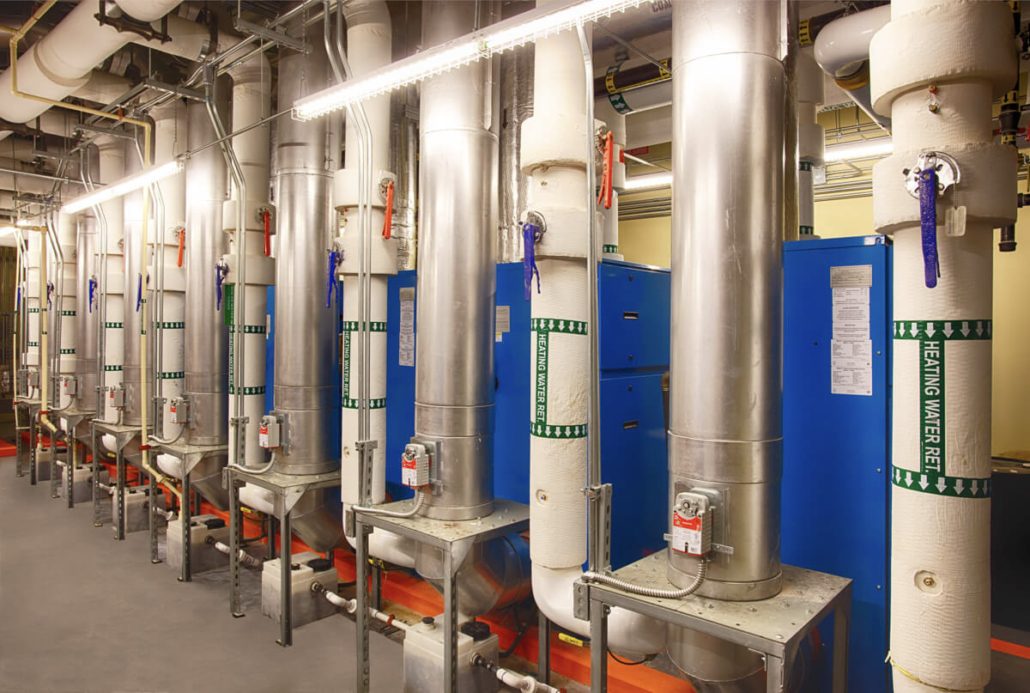
Strict operating requirements must be met to guarantee boiler function. It’s important to appropriately size the system and consider the outlet pressure of the boiler for proper operation. In a multi-boiler setup, you need to accurately size the vents, runs and external exhausts individually and in relation to the entire system. Our calculations of pressure and draft guarantee that each boiler operates within the correct outlet pressure range, and we incorporate sequence draft control when needed to enhance performance.
Generator Exhausts
Properly sizing the generator ensures effective ventilation and avoids back pressure complications. Accurate generator sizing is needed to maintain proper ventilation and prevent backfires from unfired appliances. Our expertise lies in conducting pressure calculations to accurately size systems, preventing any potential back pressure issues.
Grease Ducts
By calculating the velocity of air movement, we can determine the ideal fit and size of the grease duct system, ensuring compliance with national code regulations. This vital step guarantees that grease particles remain in motion, adhering to safety standards. Appropriate sizing of grease ducts not only mitigates the risk of fire hazards caused by grease accumulation but also maintains the correct balance of make-up air in the room, preventing excessive removal or addition of air. It’s crucial to emphasize the significance of accurate calculations to avoid the dangers associated with incorrect grease duct sizing.
Outer Shell Temp Calculations
The calculation of outer shell temperature plays a role in determining the safety of occupied spaces during system operation. For instance, in the case of a generator system (which reaches temperatures as high as 1100°F), it’s essential to consider the elevated temperature in relation to the clearance of combustibles to mitigate fire risks effectively.
To address these concerns, our approach involves recommending specific products based on the outer shell temperature. By considering these factors and conducting heat transfer calculations, we determine the optimal product type and insulation thickness required. By tailoring the level of insulation to the exact system requirements, we can provide optimal protection while being mindful of other cost considerations.
Outer shell calculations may also help determine issues with pre-existing systems. For instance, a customer reached out to us regarding excessive discoloration and dangerously high building temperatures. Our calculations revealed that the system was running at temperatures too high to be deemed safe.
With this information in hand, it became clear that upgrading the insulation and enhancing the protection of the support plates were necessary steps to take. We recommended the appropriate insulation amount and provided steel covers for insulation. These measures allowed us to pinpoint the problem and implement effective solutions to rectify it.
Load Calculations
Load calculations on generator systems address thermal expansion at high temperatures. As hot temperatures pass through the flue, thermal expansion occurs, which is managed by bellows supported by rigidly attached plates. Load calculations determine the pressure applied to the support plates, enabling engineers to determine the necessary structural steel rigidity. This ensures the support plates hold firm, allowing the bellows to perform effectively and safely.
Combustion Air Calculations
Combustion air calculations make sure that the correct amount of air can get to a boiler. Boilers work better when there’s a blend of outside and inside combustion air, making it an important consideration for any engineer tasked with designing a boiler room. To meet its requirements for fresh air and clean water, it must draw combustion air from the outside, necessitating the use of a properly sized intake. These calculations may even suggest installing open louvers to draw air from the outside to balance the pressure. By analyzing combustion air requirements, engineers can create an environment for boilers to perform at their best.
Be Precise, Be Certain with Schebler
We’re here for you as an engineer—our team is standing by to answer your questions and help you make sure your calculations are complete, accurate and best suited for project success. Contact us for assistance and make certain you have the proper calculations.

